General Cherry – Website design and development with a custom CMS for a defence tech manufacturer: from discovery to launch in 3 months
Overview

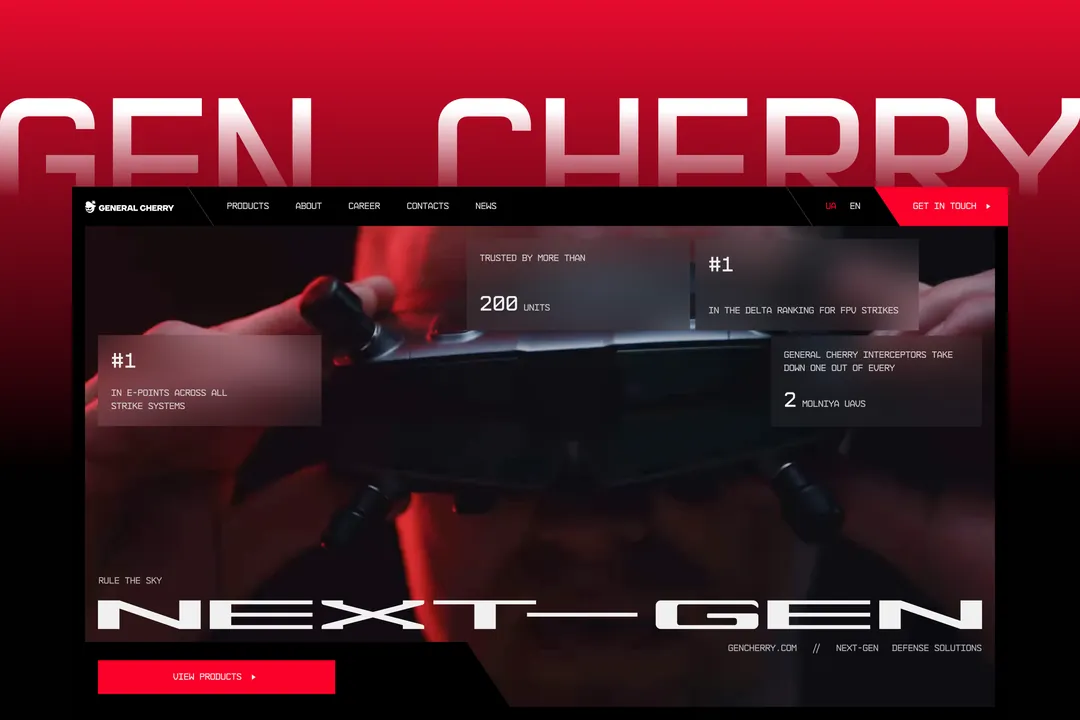
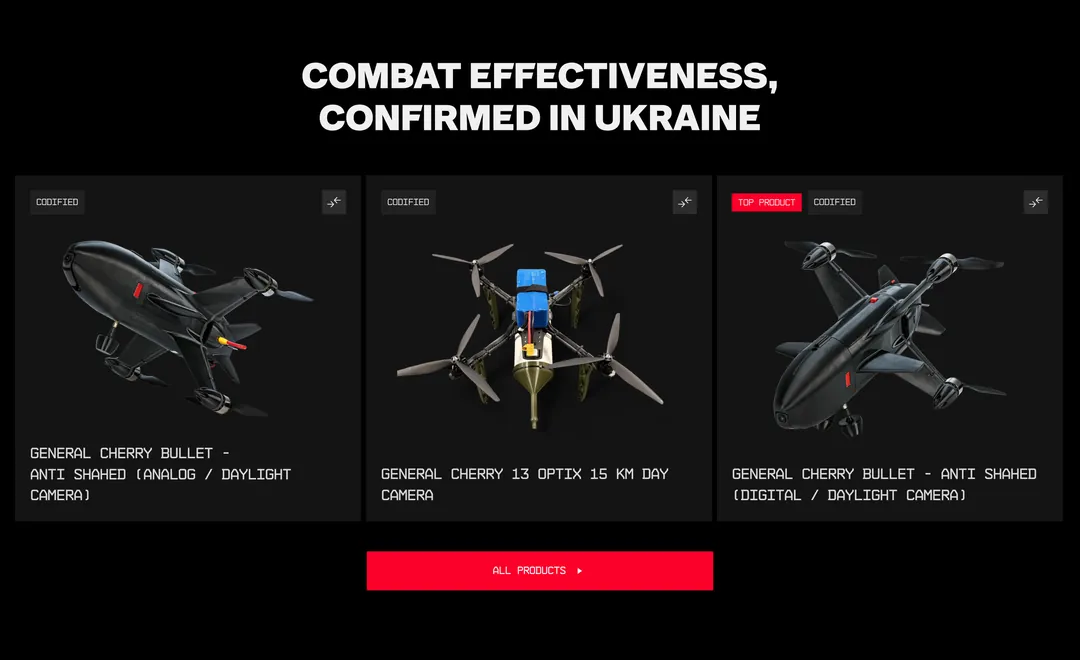
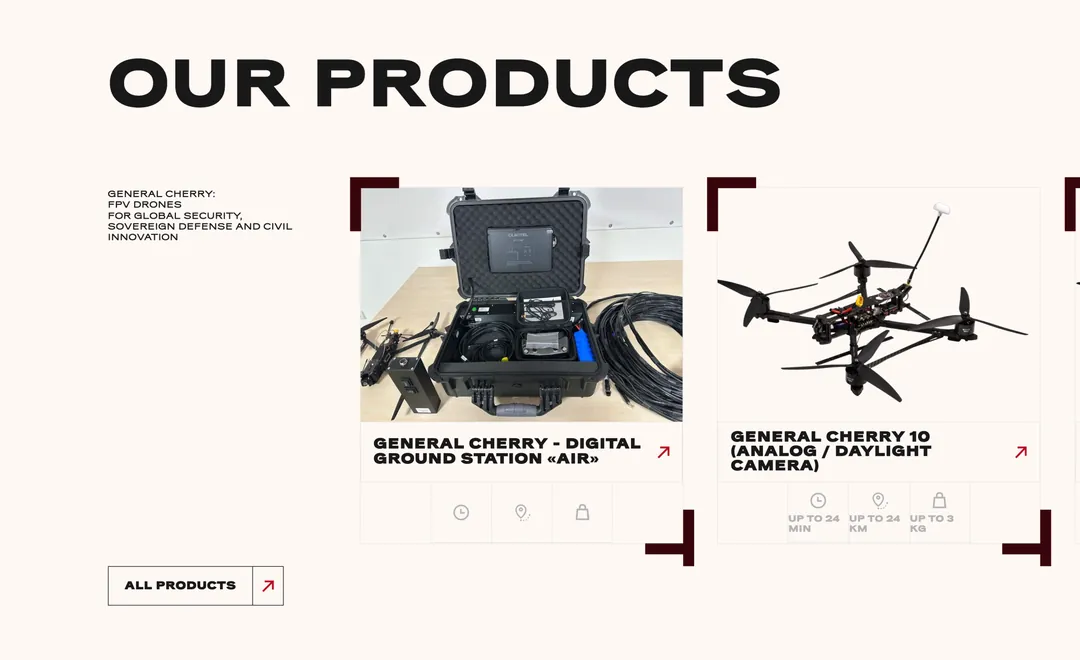
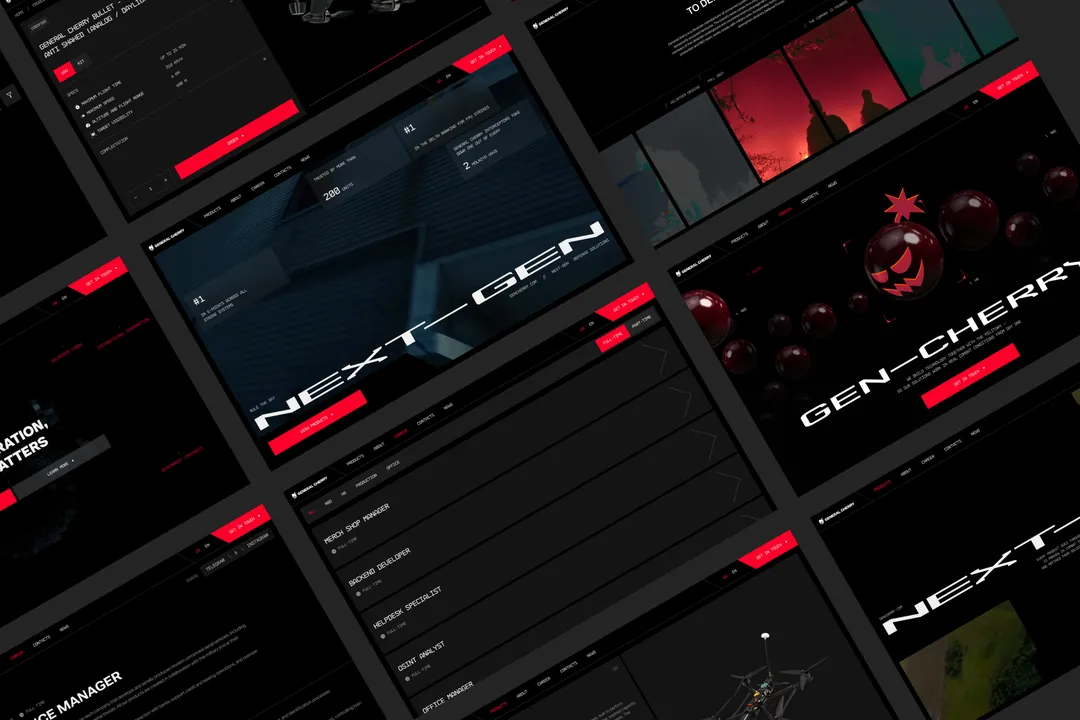
Collaboration overviewSpaceberry redesigned and rebuilt the corporate website of General Cherry, one of Ukraine's top five drone manufacturers. In three months we went from a discovery phase through UX/UI design and web development to a live bilingual corporate website with a custom, role-based CMS that the client's team runs on its own.
Challenge and solutionThe company had outgrown its website. To bring the corporate website up to the company's real level, we ran discovery, designed the structure, delivered website design and development, and built a role-based admin panel for all content. Now the site moves at the same pace as the business.
- Client
- General Cherry
- Industry
- Defence tech
- Region
- Ukraine
- Engagement model
- Subscription
What we did
- Market and user research
- Information architecture
- 10 concepts
- Design system
- Front end
- Back end
- Role-based admin panel
- SEO audit
Built with
 Next.js
 React
- Custom back end and CMS
- Cloud infrastructure inside the client's own environment
Spaceberry team
- C-level
- CTO
- Design lead
- Design engineer
- Project manager
Client team
- Marketing director
- Project manager
- DevOps
- Art director
- Website manager
Client background: a defence tech manufacturer that outgrew its website
General Cherry came to us for a website redesign: a site that wouldn't look like any other drone manufacturer's. At presale we proposed widening the scope: not only design, but web development with a custom CMS, under one contract.
Who they areGeneral Cherry grew from a volunteer initiative into a company that has manufactured FPV drones, interceptors, fibre-optic and fixed-wing systems since 2023. It supplies units directly and through partner charitable foundations, and it is one of Ukraine's top five drone manufacturers.
Before usThe company invested where it mattered most: production capacity, drone quality and service for units. Within a few years it reached the top five, and its website no longer matched its real level or positioning. The old site ran on Webflow, and managing content took extra effort and several outside contractors.
TriggerA rebrand was nearing completion, and the old site no longer fitted the new positioning. At the same time, the website had to serve a wider audience: not only people who already knew the context, but international partners and buyers too.
The briefA website redesign with its own identity, free of the patterns other manufacturers use. The benchmark was strong design-led websites rather than industry templates, and the client explicitly asked us to avoid clichés. The site had to carry the corporate spirit and the new brand, load fast and be easy to use. The client was open to a modern development approach and did not insist on a familiar stack. Just as important, the team wanted to update the site themselves, without calling in designers and developers every time.
Why they chose usRelationships take time, and we invested in this one before any commercial agreement: we worked to understand the client, their business and their goals as deeply as we could. That let us shape a value proposition around the company's real needs, and one we could actually deliver. And, of course, as two Ukrainian companies we share the same context.
Risks at the startThe main risk sat in the development approach chosen for this project. Conditions were tight: a short deadline, the client's own stack requirements and high expectations for the visuals. On top of that, a rebrand was running in parallel, led by another agency.
How we worked together: one team for UX/UI design and web development
A compact team on our side and a single decision channel on the client's side kept web development on pace against a tight deadline.
Rhythm and decisionsCommunication ran in the client's corporate environment: a weekly meeting with a live demo, plus daily updates in chat. Several stakeholders were involved on the client's side, as is typical in enterprise, so every question went through the project managers on both sides. We got one agreed position instead of several parallel opinions.
Engagement modelA flexible subscription that kept the focus on results, not hours spent.
Design-to-code with no handoffThe specialist who designed the screens also built them in code. That removed specs, animation walkthroughs and rounds of fixes for gaps between mock-up and build, so decisions never waited for a handoff between roles.
Where AI helpedUnique pages were built by hand. Where the structure repeats (catalogue, news, vacancies), AI sped up the work. In discovery, AI searched and analysed information and helped shape hypotheses. The admin panel gained the most: every new website block arrived together with the tool to manage it, in a single pass. The vacancies section, with its public pages and admin controls, shipped as one complete change.
What we delivered: discovery phase, design system and custom CMS
The first step wasn't design but a company-wide discovery phase, and it defined what the website would become.
For complex projects and enterprise companies, the discovery phase is where we always start. We analysed 23 players in the miltech market and 16 drone manufacturers, ran a strategy session and 10 in-depth interviews inside the company, held 4 interviews with military personnel and ran an independent survey of 60 Azov service members. An offline workshop with 9 participants produced 23 new ideas.

We built the site's information architecture during this phase, straight from the research findings, rather than as a separate step before design.
Insight one: in this industry, leaders communicate the full cycle, not a single droneLarge manufacturers build their websites around training, service, support and community, while most others show only hardware. For our client, that meant presenting production, R&D, service and frontline feedback as one system, not a list of drones with specs.
Insight two: the site has two audiences with different levels of contextA Ukrainian audience reads proof of combat effectiveness without explanation. An international partner finds those figures less meaningful and looks for codification, approvals and certification. So the site shows both layers of proof, in two languages, without a separate "export" version.
One offer, two options: WordPress development or a custom build
Decision 1. Custom development instead of WordPress, at our own riskWe made one offer with two options. The more predictable one: design plus WordPress development. The second: design plus custom development built for the project, the more convenient and scalable option in the long run. So that the risk wouldn't fall on the client, we agreed up front: if it didn't work, we would cover the cost and move to WordPress seamlessly. The client trusted us, and the approach worked.
Decision 2. A custom CMS instead of an off-the-shelf oneFor a defence tech manufacturer, this isn't about convenience. A custom CMS means no third-party providers in the site's infrastructure, so no extra channels for sensitive data to leak, and no outages caused by someone else's plugin update. The role-based admin panel follows the client's brand and contains only the sections the company actually uses, from products and enquiries to news and reviews. There are two roles: editors manage all content, and only administrators manage users.
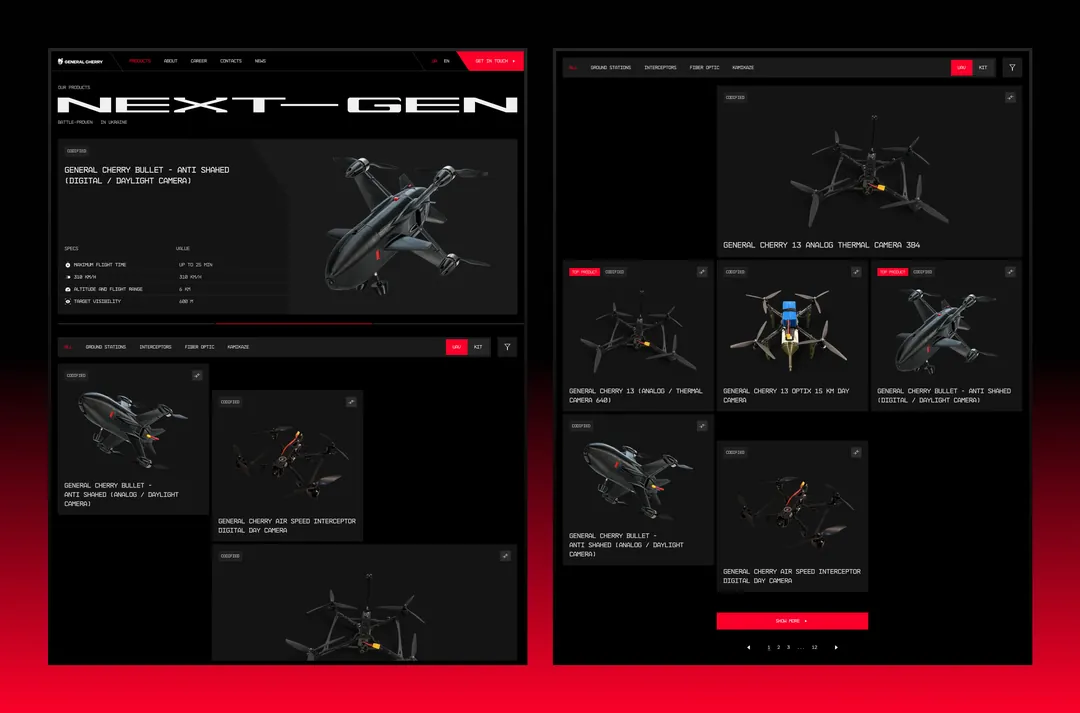
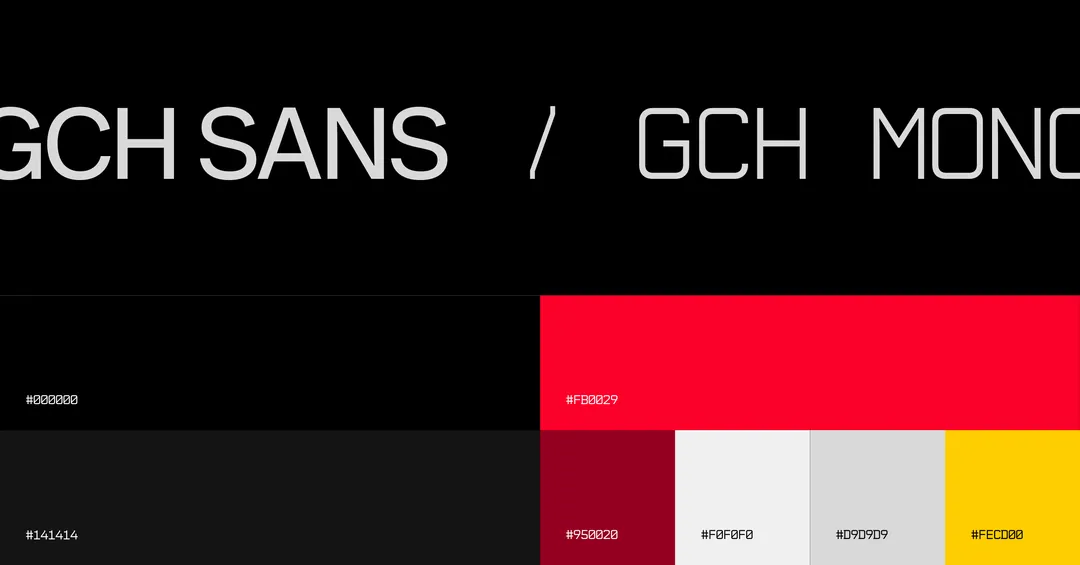
Decision 3. The design system lives in codeWe found the visual direction iteratively: we started with several concepts and developed them with the client until we agreed on the final one. In Figma we created the base tokens, styles and components. During development, AI carried them into code and then generated new ones on that foundation. This gave us speed, because every new block is assembled from existing parts, and precision, because animations and small details reach production exactly as designed.
Technical layer: a Next.js website with a custom CMS
The front end is built on Next.js and React, with animations that don't slow down loading. The back end and custom CMS were built for this project, with no ready-made website builders or third-party plugins.
Security is built into the architecture: the public site serves only published content, the admin panel is open only to authorised staff with role-based access, and form submissions are not accessible from outside. The site is bilingual (Ukrainian and English), and all infrastructure runs inside the client's own environment.
How we ensured web development quality
Building custom on a tight deadline called for transparent quality control at every stage.
The CTO reviews the codeOur CTO, with more than 10 years of experience in software development, was directly involved in the process and reviewed the code.
Two layers of testingThe website and admin panel went through both automated and manual testing. The automated layer covers static code analysis, type checking, database change checks and more than 130 automated server-side tests. Dedicated tests cover every public and admin endpoint, authentication, access control and integrations with external services.
Handover to the client's environmentThe client's DevOps team now owns the system, and we shaped the final infrastructure configuration around their requirements. For the handover we prepared detailed deployment documentation and a separate document with the system's security rules. Deployment is automated, with separate production and test environments. We continue to provide technical support after launch.
Challenges during the website redesign
An infrastructure change before handover
At the start we agreed on one infrastructure setup. Closer to handover, the client's DevOps specialist, who would own the system, joined the project and proposed a different setup that fitted their environment. We agreed: if an alternative gives the client a better long-term result, we're open to it even late in a project. The migration was quick, work never paused, and the launch date held.
The brand was being built in parallel by another team
A separate agency was updating the brand identity while we worked: we were moving from concepts to production while the brand was still changing. This first showed up at the concept stage, and again when the agency released a new version of the brand presentation. By then, small visual adjustments were enough.
Rather than wait for the final identity, we built changes in gradually, in logical iterations. What already worked on the site kept working, and updates arrived in separate steps, so no brand change ever stopped web development.
Results: a fast defence tech website the team runs itself
3months
From discovery to launch
1.4s
Main content load on desktop (CrUX)
2
Languages, Ukrainian and English
2
Admin roles: editor and administrator
General Cherry is a defence tech manufacturer in a country at war, so its commercial figures are not disclosed. Here is what changed in how the corporate website works.
SpeedAccording to real-user data (Chrome UX Report, last 28 days), the main page content loads in 1.4 seconds on desktop, and the site passes Core Web Vitals.
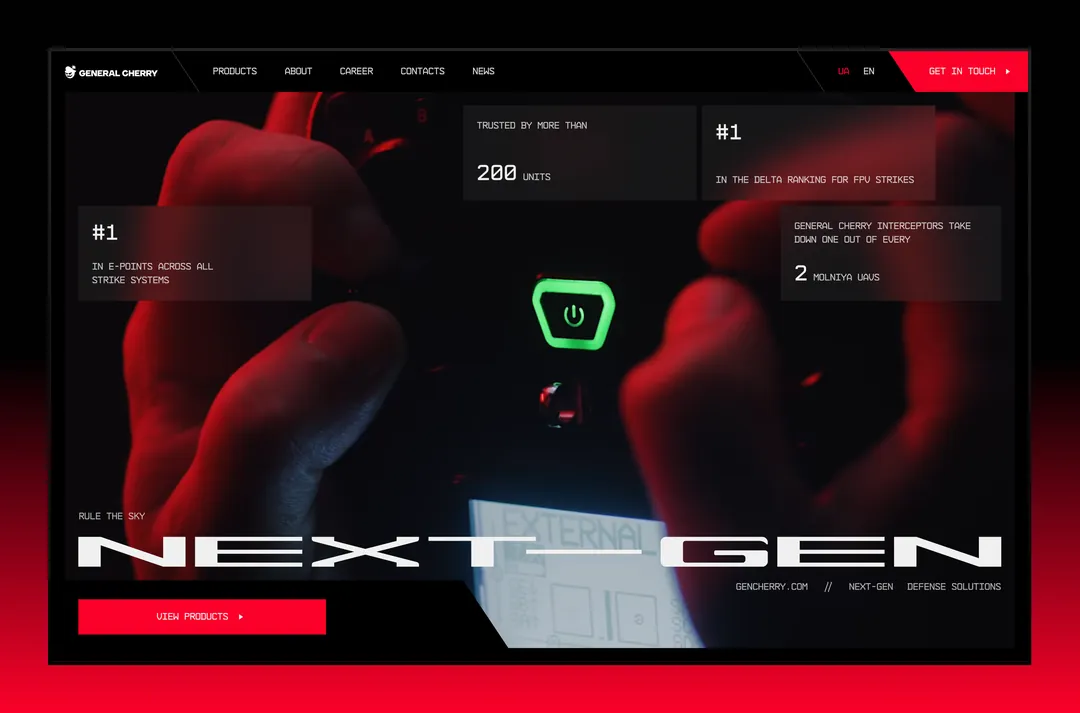
Process and workloadA change goes from request to production in a few days. Submissions from every form on the site flow into one channel, are sorted by type and routed to the right department, which has taken load off technical support. For HR we built an integration with PeopleForce: vacancies and applications sync automatically, with no manual copying between systems.
Sales and visibilityWe rebuilt the journeys that drive enquiries: the catalogue, the product card with specs, ordering and partner requests. We ran an SEO audit, connected Google Tag Manager and structured the content so that both search engines and AI assistants can read it.
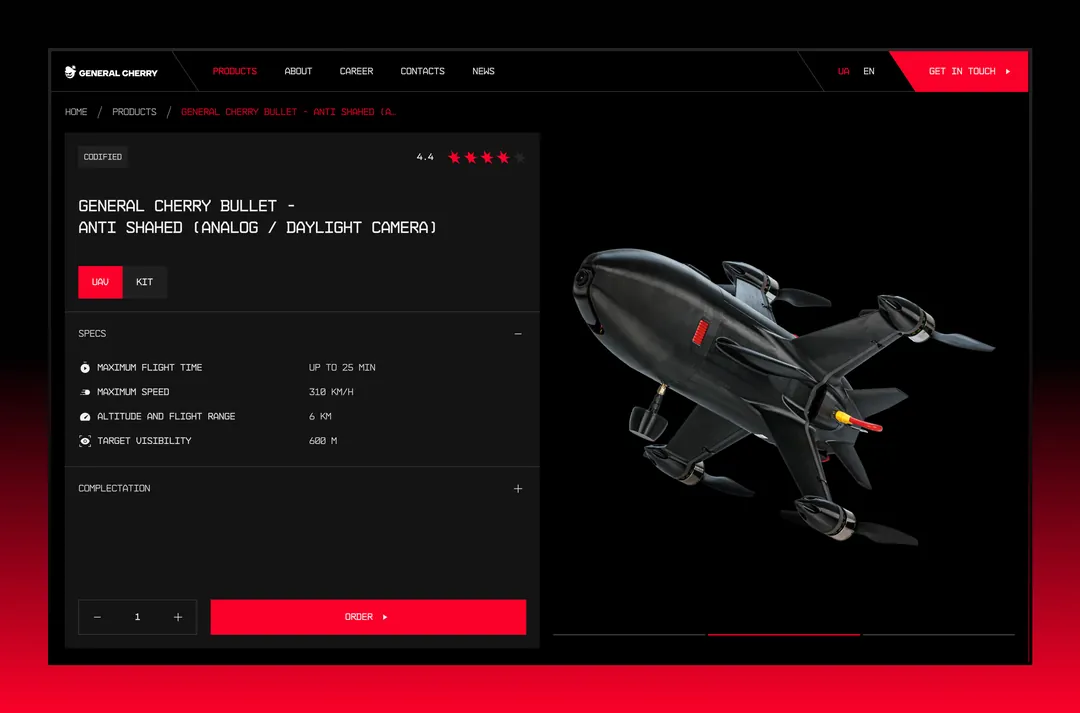
How the company looks from the outsideAfter the website redesign, the site matches the level of the product itself: it holds its own next to global manufacturers and supports the company's reputation in talks with international partners.
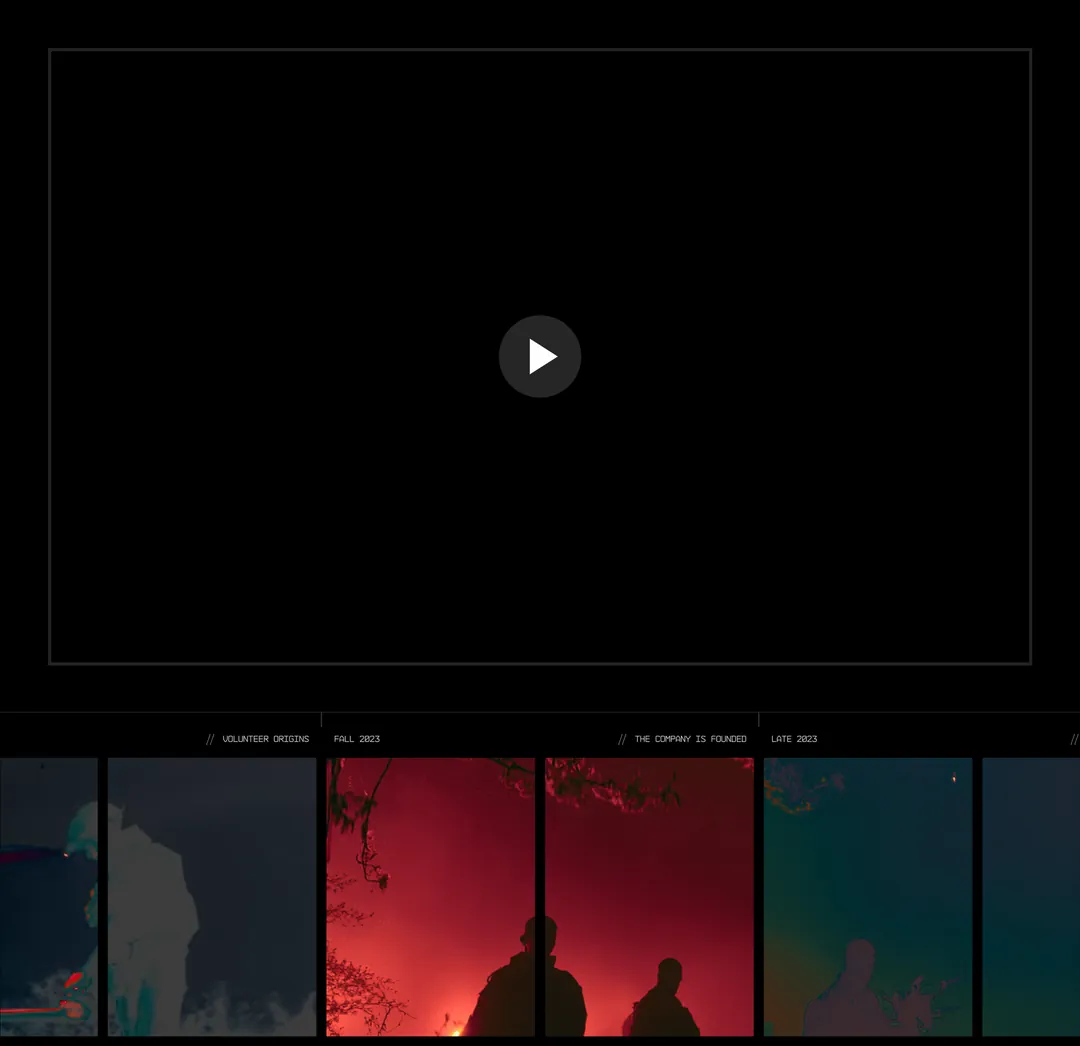
Where the product is nowThe site runs at gencherry.com in two languages, with a new design and working integrations. The main success criterion from the start has been met: the client's team runs the site independently, without designers or developers.
Client voice: verified Clutch review
 ClutchVerified review · 24 September 2026
What stood out most was their ability to handle the project as one connected process rather than treating design and development as separate tasks. The team combined research, UX/UI design, design systems, development, backend logic, and SEO considerations within one workflow. This helped keep the final product consistent and ensured that both the user experience and technical implementation supported the same business goals.
- Quality 5.0
- Schedule 5.0
- Cost 5.0
- Willingness to refer 5.0
What the client called the resultA much stronger digital foundation: a fully rebuilt website, a clearer user experience, a consistent visual system and infrastructure that supports how the business runs.
Need website design and development for a complex product?
This case is closest to your situation if:
- your current website or app no longer reflects the real level or positioning of your product and company;
- you're scaling into new markets and audiences, and your website has to keep up without a rebuild from scratch;
- you don't have an in-house development team, so every change starts with finding a contractor;
- you work with sensitive data, and your infrastructure needs to stay inside your own environment rather than on third-party platforms.
We cover the full cycle: research, website design and development, and a custom CMS built around how your team works.