SPAND Group – Custom HR software development: an in-house HR platform for five companies, live MVP in one month and up to 70% cheaper to run
Overview
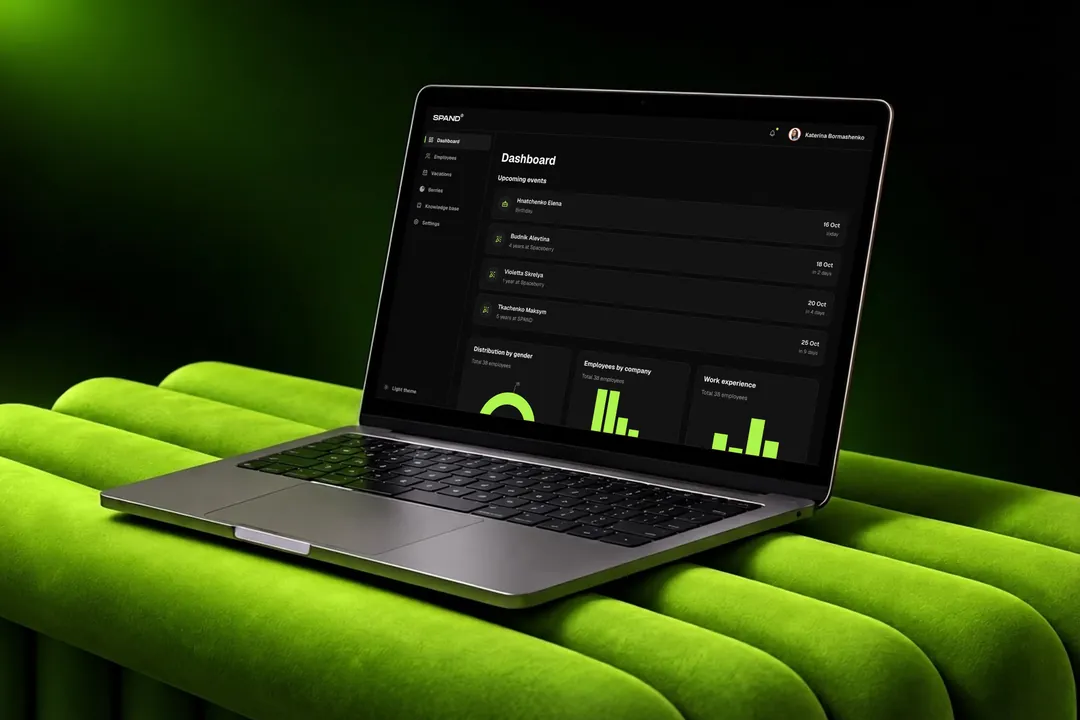
Collaboration overviewSPAND Group, a group of five companies, dropped its external HR subscription and moved to a platform of its own. Spaceberry delivered custom HR software development end to end: process discovery, UX/UI design, development and data migration from PeopleForce. The project took three months: a live MVP with real employee data after the first month, then two more months of new modules, testing and polish.
Five companies, one HR team and a handful of tools that never talked to each other. SPAND Group came to us with a simple request: stop living between services and spreadsheets. Over three months we built an in-house HR platform where employee records, leave, rewards, contacts and calendars work as one system. The live MVP was ready after the first month, and the HR database moved across from PeopleForce without pausing day-to-day work.
Before, what we did, afterBefore: employee data in PeopleForce, programmes and key dates in spreadsheets, and HR acting as a manual sync between them. What we did: one platform on a shared employee database. After: HR runs processes for the whole group from one place, and the system grows with the company with no extra licence cost per hire.
- Client
- SPAND Group
- Industry
- IT, digital products
- Region
- Ukraine
- Engagement model
- Project-based
Timeline · 3 months
- Month 1Product discovery and a live MVP
- Months 2–3New modules, testing and polish
What we did
- Discovery
- UX/UI design
- Design system in code
- Development
- Data migration
- Roles and permissions
- Calendar subscriptions
- Testing
- Launch
Built with
 Next.js
 React
 Mantine
Spaceberry team
- C-level
- Project Manager
- Product Experience Director
- Product Design Engineer
- CTO
Client team
- C-level
- HR
- Employees involved in testing and feedback
Client background: when off-the-shelf HR software stops keeping up
Who they areSPAND Group builds its own digital products, service businesses and social projects. The companies differ, but one HR team serves the whole group: headcount records, leave, key dates, bonus schemes and team initiatives.
What was there beforeEmployee data lived in PeopleForce. Everything that did not fit spread across spreadsheets and separate tools: bonuses, team programmes, birthdays, partner contacts. Every change meant updating a record in several places and checking nothing got lost. HR spent a large share of its time syncing data, and employees had no single place to find their information or submit a request.
The triggerThe group had searched for a ready-made product that covered all its scenarios and could not find one. The turning point was agentic development: it made building in-house realistic in both timeline and budget. It opened a clear path: build a system around the group's own processes and stop paying for every new hire.
GoalsRemove manual HR work, cut tooling costs, take back control over employee data and access, and give internal motivation programmes a proper home.
Why SpaceberryWe have worked alongside this team for a long time and understand its processes from the inside. So we came with a clear proposal: a product approach, design and development in one pair of hands, and a live MVP within the first month.
How we worked: HR software development with design and code in one loop
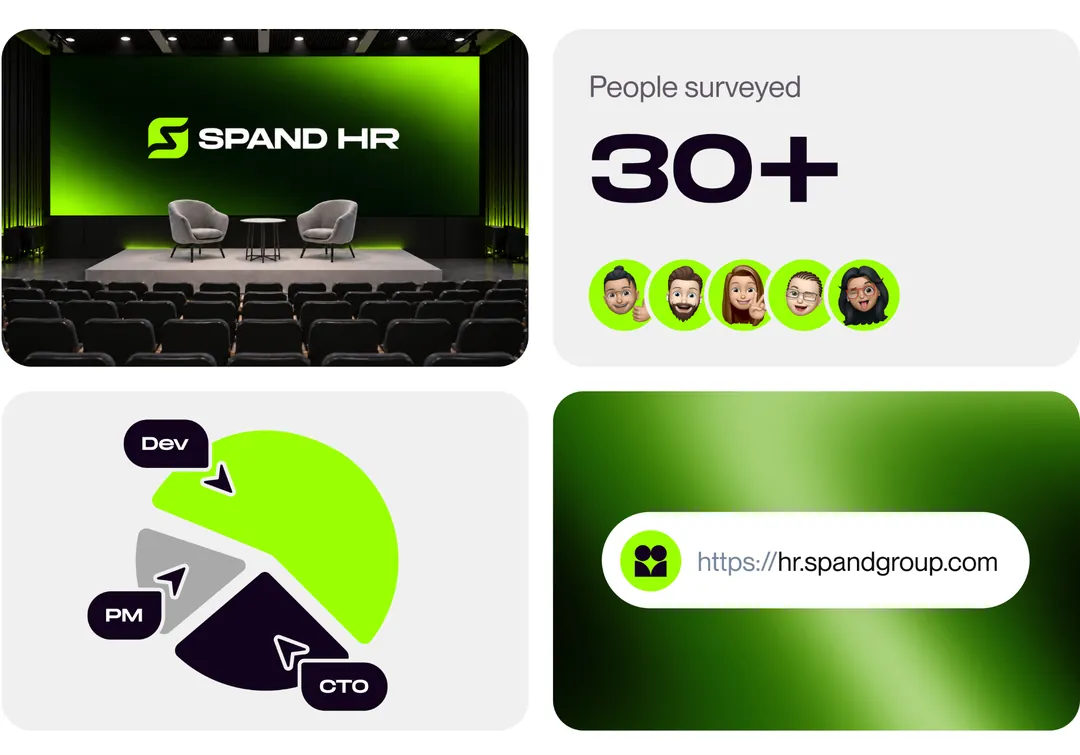
Product discovery, weeks 1–2We surveyed more than 30 people across the group, interviewed HR, audited the existing tools and reviewed off-the-shelf HR platforms. We looked for where time gets lost: which actions HR repeats every day and which data it re-enters by hand. That shaped the information architecture, the key user flows and a visual direction in line with SPAND Group's brand identity.
Design to code without a handoverInterfaces were designed and tested directly in the working product, with no separate handover from design to development. Recurring elements went into a design system in code, and the client team reviewed every decision in the live product.
Live MVP, end of month 1In weeks 3–4 we designed and built the core: employee records, leave and permissions. By the end of the first month the MVP was live, and HR started moving real employee data into it from PeopleForce. From then on real usage set the pace. Feedback came in messages, new scenarios were discussed on short calls, and the PM turned requests into tasks with clear expected behaviour and scope. That is how, for example, automatic calculation of probation end dates appeared.
Months 2–3: new modules and polishOn top of the MVP we added the rewards programme, partner contacts, calendar subscriptions and the knowledge base. In parallel we consolidated the design system, checked every role's permissions and tested each change before release. By the end of the third month the platform was complete and polished.
Where AI helpedPeople owned the product, UX, architecture and design system. AI sped up the implementation of features and code changes. Spaceberry specialists reviewed every decision, and the CTO reviewed the code before every release.

What we delivered: custom HR software built around the group's processes
Discovery produced two insights that the whole platform rests on.
Insight one: one system, several companies, different rolesHR needs an overview of the entire group and a one-click switch to a specific company. Employees need only their own data and actions. Hence a shared people directory, a company filter, a group dashboard and role-based access.
Insight two: one date triggered a chain of manual tasksA birthday or a holiday had to be found in a spreadsheet, copied to a calendar and flagged to the right people. Now the platform stores the event, creates the calendar entry and sends reminders on its own.
Decision 1. One employee database for every moduleWe could have kept the existing tools and stitched them together with integrations. We chose a single employee database with modules: HR records, leave, rewards, team activities, a knowledge base and partner contacts. Employee data was migrated from PeopleForce. Every new feature builds on the same data, so the platform never splinters into new silos.
Decision 2. An employee rewards platform tied to business goalsBonuses that used to live in spreadsheets became part of the product. Employees submit requests and see their balance, history and available rewards; HR manages rules and approvals. The programme rewards exactly what matters to the group: quarterly goals, bringing in clients, candidate referrals and knowledge sharing.
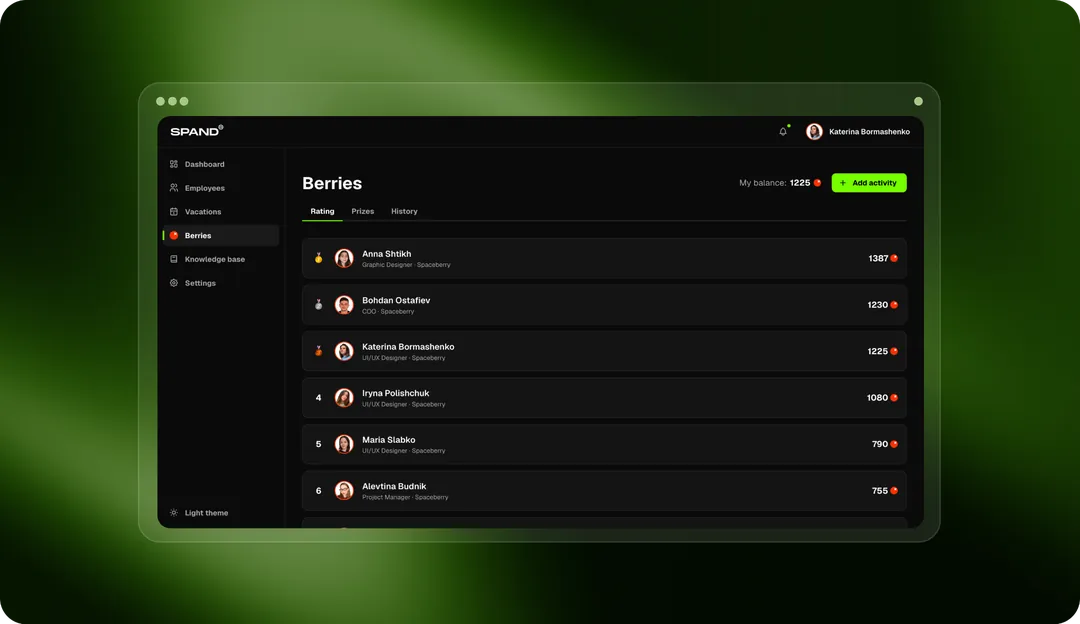
Decision 3. Events in the calendars people already useA separate calendar inside the system would have been one more place to check, so approved leave and birthdays flow into a calendar subscription for Google Calendar, Apple Calendar or Outlook. The team changes nothing in its habits, and the data shows up where people already look.
Decision 4. Role-based access and a full audit trailEmployees, HR and super admins see different sections and actions. Profiles can be archived and restored, permanent deletion is reserved for super admins, and an activity log records every change. For a system holding employee data, this was part of the foundation from day one.
Decision 5. A design system tested inside the productAfter the first screens we built a live component catalogue: buttons, forms, cards, tables, dialogs, loading states. HR comments on a specific element, the developer changes it once, and the change appears on every screen.
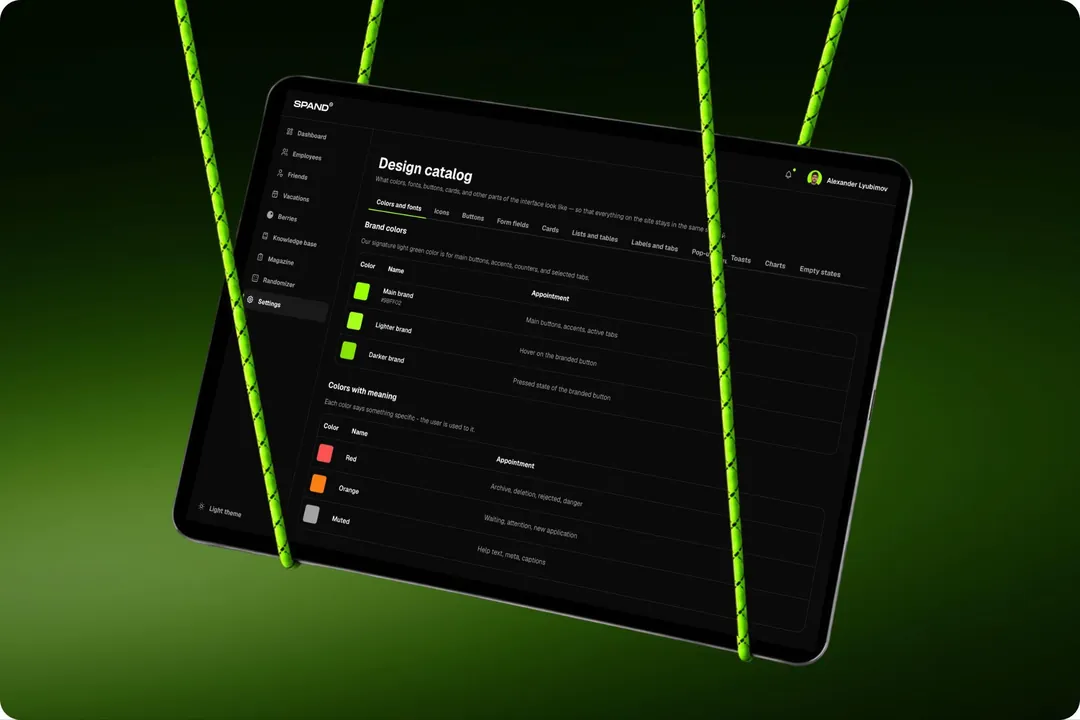
How we ensured qualityThe developer and the CTO reviewed the code. Every change went through a separate test environment before reaching the live system. HR confirmed that the flows matched its work, and C-level signed off the launch. After launch Spaceberry stayed on the project, supporting the platform and developing it together with the team.
Challenges: keeping the code clean at high speed
Speed demanded discipline
Agentic development produced the first screens in days, but it also produced similar components with different implementations. In a system holding employee data that is a risk: every duplicate is one more place for an error. In the second month we invested time in clean-up: removed duplicates, consolidated shared components, checked each role's permissions separately and separated archiving from deleting profiles. The next screens were built on a shared foundation and shipped faster.
The live MVP triggered a wave of requests
As soon as HR and employees saw that the platform could be shaped around them, requests multiplied. The priority was not to lose the core flows. The PM and the client prioritised with two questions: what removes the most manual work, and what does the change cost. Small improvements shipped in short cycles, larger features as separate tasks with deadlines.
Results: less manual work, lower cost, a system that grows with the company
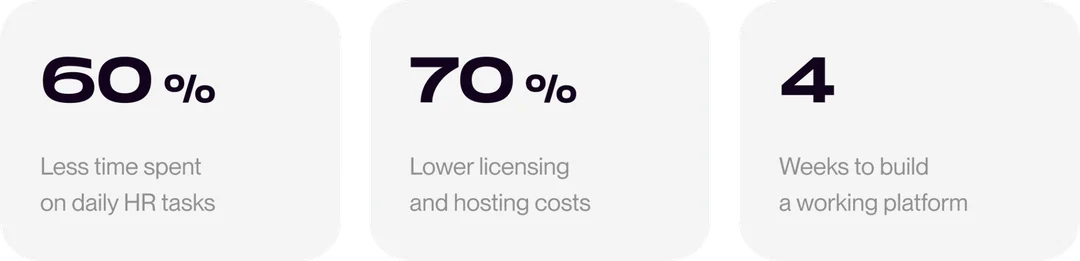
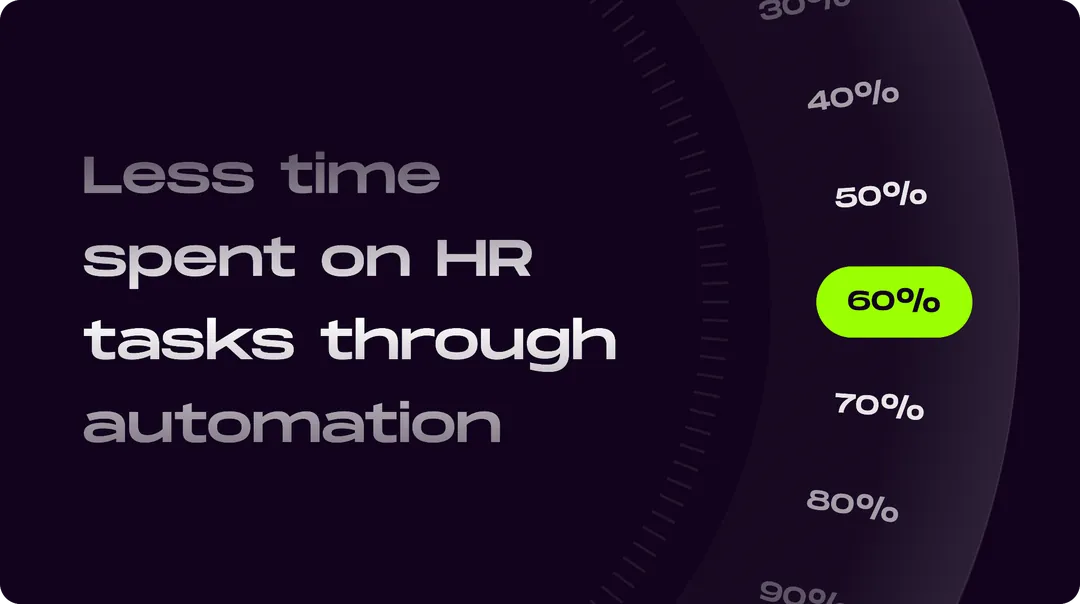
60%
Less time on HR routine (estimate)
70%
Lower running costs (estimate)
A live MVP in one month, a polished platform in threeOne Product Design Engineer handled design and development, supported by the Product Experience Director, the PM and the CTO. HR started working in the MVP after the first month, and by the end of the third month SPAND Group's whole HR function ran on the finished platform.
Up to 60% less time on HR routineProfiles, leave, rewards, contacts and team activities now sit in one product, and the platform handles accruals, calendar events and reminders itself. For the same volume of operations, the estimated time HR spends on them drops by roughly 60%. That is HR automation HR can see in its working week.
Up to 70% lower running costsThe group no longer pays an external vendor per employee. By estimate, licences and hosting for the in-house platform cost about 70% less than an annual subscription to an alternative HR service. The gap widens with every hire, because SaaS is priced per employee.
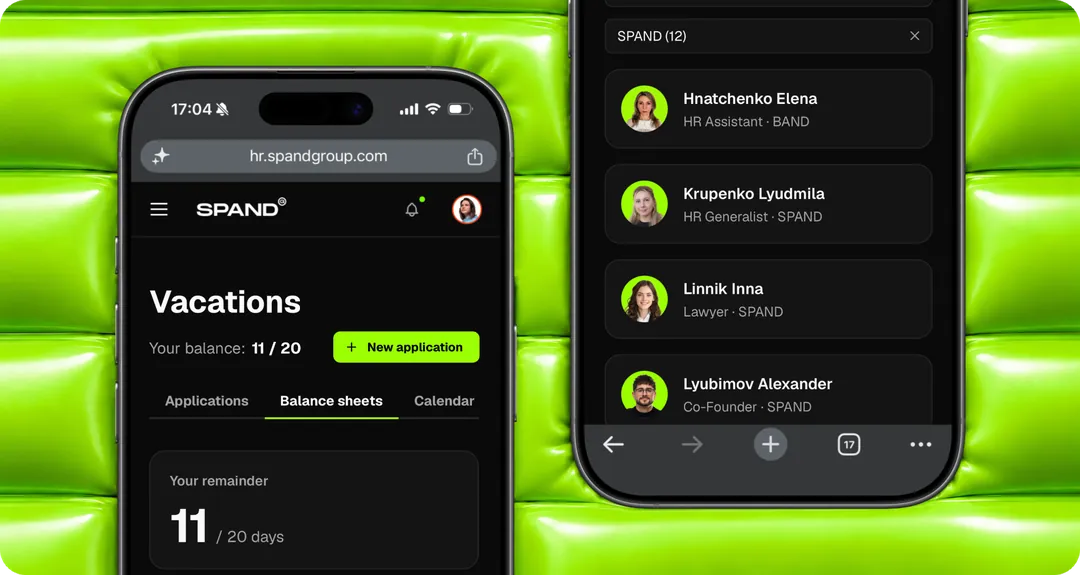
Where the product is nowSPAND Group works in the platform every day, and the collaboration continues. Next up: a first-week onboarding checklist so new joiners complete every step in the same system.
Client voice: moving off PeopleForce without stopping work
"Working with Spaceberry was easy and enjoyable. The team moved fast and kept us informed at every stage: we understood what was ready, what was in progress and what to expect next. They helped us migrate employee data from our previous platform and organised the transition so the team could keep up its day-to-day work.
What we valued most was their commitment to the end result. The team took the time to understand our tasks, suggested improvements and responded quickly to feedback. In the end we got a convenient product built around our processes and a clear path for its further development."
HR team, SPAND Group
For the client, what mattered most: a transition with no pause in daily work, and a product that evolves together with its processes.
Need custom HR software built around your processes?
This case is about you if:
- your HR data is scattered across SaaS tools, spreadsheets and chats;
- your HR platform does not support your internal programmes;
- your subscription bill grows with every hire;
- you want to change your HR system on your own schedule.
Let's start with Product Discovery: we map your processes and show what to automate, where existing tools are enough and what is worth building. You get priorities, a first-version scope and an estimate. From discovery to launch and beyond, one team does the HR software development and the internal tools development around it.